"Big Boys Don’t Cry": Breaking the Cycle of Misguided Masculinity
December 10, 2025 – 4 min read
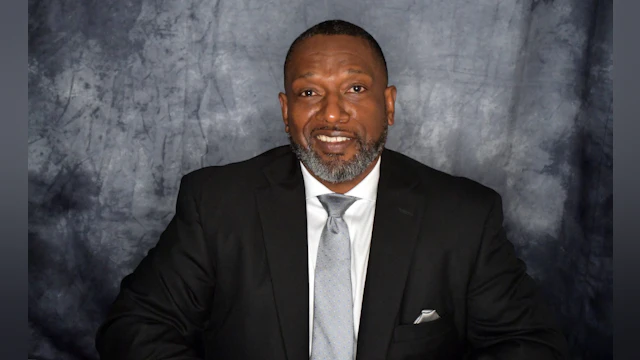
By Victor (Vic) Armstrong, MSW, AFSP Vice President for Health Equity and Engagement
For many men, the idea of being vulnerable or acknowledging mental or emotional pain can be a taboo subject. Conversely — in my experience, at least — women tend to be much more willing to talk about feelings and emotions. Statistically, it’s true that women are much more likely to seek help for mental health challenges like anxiety or depression. I’ve given a lot of thought to this over the years, because it’s so important for everyone — men included — to feel comfortable in talking about mental health and reaching out for help when they need it. Is it that men and women, boys and girls, are simply wired differently? More likely, in my view, there is a deeper, more practical reason.
Growing up in rural North Carolina in the late ‘70s and early ‘80s, participating in sports was a given, especially for young boys. Playing youth league and high school football was a rite of passage. For my brothers and I, it was an expectation. I never remember being asked if I wanted to try out for the junior high school football team. It was an expectation held by my father, and an expectation I was eager to fill. I recall my mother having to tell me I couldn’t wear my uniform at the dinner table, because I was so excited to receive my new gear that I didn’t want to take it off. This love of football followed me into high school where my friends and I felt like celebrities as we roamed the halls of Plymouth High School, sporting our letterman jackets. This was long before concerns arose more widely about Chronic Traumatic Encephalopathy (CTE), the progressive brain disorder associated with contact sports.
Sports, especially football, in many ways epitomized the philosophy of how young boys were socialized at the time and continue to be socialized today. We were taught that “big boys don’t cry.” We were taught that to be male was to be physically strong and emotionally muted. I even recall a high school football coach who would always respond to our physical injuries with the guttural command, “Rub some dirt on it!” This advice clearly was not conducive to healing, physically or emotionally. But in many ways, this colloquial expression mirrored the way boys like me were taught to handle emotion. Show physical strength but never express vulnerability — because vulnerability was considered weakness.
Today as a father of boys, I have an opportunity to break the cycle of misguided masculinity. As opposed to the tried and not-so-true methodology of “rub some dirt on it,” I offer the following advice to those who influence the lives of young men:
Teach them to name their feelings. When we teach young men to acknowledge and name their feelings as they occur, we help them build an emotional vocabulary. Far too many men have never acquired the language they need to express feelings and emotions. As a result, they often bottle their feelings up, as opposed to talking about them. Instead, they may respond with violence or negativity, or by self-medicating with drugs and alcohol.
Model the behavior you want to see. The best way to teach young men to express their feelings is to set a good example yourself. A good first step is to be willing to name your own emotions. Start by talking about your own feelings and describe how to best express those feelings. For example, you might say, “I felt embarrassed when a co-worker pointed out my mistake in front of everyone.” You can also create opportunities for them to come up with solutions in response to various emotionally charged situations, and then discuss why they are or are not appropriate.
Listen without judgement. Creating a nonjudgmental environment allows children to truly express their emotions, which promotes resilience and stronger emotional regulation. When a child feels heard without fear of judgment, they learn that their feelings are valid and that they can seek help when needed. When listening, give your full attention. Put away distractions and focus only on your child. Sit at their level, lean in, and nod to show you are engaged and listening, and be sincere in your attempt to understand their perspective.
Validate their feelings. Actively listen to them without judgment, reflect their emotions back to them, and communicate that their feelings are understandable and real, even if you don't agree with their response to the situation. Avoid jumping in to solve the problem for them. Allow them space to work through their emotions. Once you have validated their feelings, you can help them figure out what to do next.
Teaching men at an early age to manage emotions is crucial for their mental and physical health, and social development. Teaching them to identify their emotions, both positive and negative, helps them to be in touch with their own feelings and emotions, and to be willing to reach out for help.
Most importantly, teaching young men to manage emotions helps them know it’s okay to not be okay.